
While the dust from the ruins of the World Trade Centre still hung in the air after the terrorist attack (September 11, 2001), a coalition emerged in Western academic, political, and media circles promoting the theory of the peaceful essence of Islam as one of the major monotheistic religions.
Is Islam truly—as so-called progressive academic circles and the progressive media have so far claimed—a religion of peace? Is the fear of Islam merely an expression of our own delusional phobias of the “unknown,” as the luminaries of progress and social engineering try to assure us? Is it really only a small handful of extremists misinterpreting their own religion that are responsible for mass terrorist attacks worldwide?
During the intensified campaign to whitewash Islam (which has been ongoing for years), I couldn’t help but feel that our social elites were making a series of monstrous and fateful mistakes.
As a historian by training, I saw one of the more serious errors in this field from the outset. It was a distorted presentation of Islam’s historical role in the shaping of European culture. Islam was presented as one of the most important links between the ancient world and European culture. Presented in this light, Muslim culture bequeathed the legacy of the ancient world to Europe and thus contributed greatly to the development of European culture.
This view, initiated in the 18th century by some revolutionary Enlightenment scholars hostile to Christianity, unfortunately persists to this day, existing in the consciousness of many enthusiasts and admirers of Islam. Even today, we are constantly reminded of the stories of Averroes and Avicenna, and it is often emphasized that we owe our current numerical system to Islam, that the concept of “zero” comes from the Arabic “zirr,” that even algebra comes from the Arabic al-jabr, and so on.
This perspective—glorifying Islam’s role in the creation of today’s Europe—completely ignores the fact that it was the Muslim invasion that caused the near-total destruction of the ancient world, which existed in various forms and developed after the fall of Roman political power. This was, after all, the world of the entire Mediterranean basin, which until the 8th century AD influenced and coexisted with the emerging medieval Europe. As a result of the invasion of Islam into most of the Middle East and North Africa and its taking complete control over the Mediterranean basin, this influence was abruptly interrupted.
The salvaged fragments of ancient culture—most often by chance, by fate—could not compensate for the almost complete annihilation of the world of St. Augustine or Hellenistic Alexandria.
Thus, I began to strongly suspect that if distortions of this scale had been perpetrated, then perhaps the very essence of the Muslim religion itself had also been misrepresented. To answer the question that haunted me, I had to get to the heart of the matter, and thus establish the theological foundations of Islam as a religion.
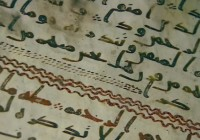
And so I immersed myself in the study of Islam. My odyssey involved a thorough familiarization with the source texts that constitute the foundations of Islam: the Quran, the Hadith Collections (quotes from witnesses about the conduct of Muhammad), and the Sira (the official, oldest summary of Muhammad’s biography). I began regularly visiting Muslim websites run by leading imams and perusing their content. I also read dozens of monographs written on Islam. One of the most important moves in this field was my establishment of contacts with former Muslims (apostates), with whom I exchanged views and learned from them the true meaning of their former religion.
The image of Islam that emerged from my research was disturbing.
Most important for our understanding of Islam is recognizing the following indisputable tenets. Let’s begin with the basics:
- The divine origin of the Quran. An explanation is needed here. The Quran is not, in principle, a historical narrative or a collection of stories, but a set of instructions on how a good Muslim should behave. While there are narrative elements, they are loose and not systematically arranged in any chronological order. The Quran was revealed to Muhammad by Allah in Arabic, and the angel Gabriel was merely the conduit for its precise transmission. As the literal words of God, the Quran cannot be changed, interpreted, or even treated as the true Quran when translated into other languages (translations are considered “translations of meaning”). Attempts to interpret the Quran in any way, any attempts to change the meaning of individual verses, interpretations that differ from those established by Muslim authorities, are considered sacrilege (blasphemy).
- Muhammad was a perfect man, without any flaws, and it is the duty of every Muslim to imitate Muhammad’s behavior to ensure their access to paradise.
- If there is any doubt about the meaning of individual verses of the Quran, one should look at the relevant examples from the life of Muhammad (Sunnah). These instances are recorded in the books known as the Hadith and in the first biography of the Prophet from the 8th century, known as the Sira. This axiom completely excludes any possibility of interpreting the guidelines contained in the Quran. Take, for example, verse 34 of chapter 4 of the Quran. It discusses the treatment of disobedient wives:
Quran 4.34 Men are superior to women because Allah has given them superiority over others, and because they support them from their wealth. Therefore, chaste women are humble and observe the law given by Allah. And admonish those whose disobedience you fear, confine them to their rooms and scourge them. But if they obey you, then strive not to coerce them. Indeed, Allah is Exalted, Great!
If anyone here has any doubts about whether the almighty Allah truly commands the beating of unruly wives, they should turn to the Hadith for guidance. What would Muhammad do in such a situation?
Sahih Muslim Book 004, Hadith 2127: Muhammad Qais testified that it was Aisha (the Prophet’s favourite wife) who narrated this incident: When the time came for Muhammad to spend the night with me, he turned around, folded his cloak, removed his shoes, and placed them beside his feet. He spread a corner of his shawl on the bed and lay there until he thought I had fallen asleep. Then, slowly putting on his cloak and shoes, he opened the door, went out, and gently closed it behind him. I covered my head, tightened the rope around my waist, and followed him, following in his footsteps until he reached Baqa. He stood there for a long time. Then he raised his hands three times and began to walk back, so I too began to walk back. He quickened his pace, and I quickened my pace. He started to run, and I ran too. He ran into the house, and I ran in too, but I was the first. While I was lying in bed, the Holy Prophet entered the house and asked, “Why, O Aisha, are you so out of breath? Nothing,” I replied. He then said, “Tell the truth, or the Subtle and All-Knowing One will tell me so.” I then said, “O Bearer of the Word of Allah, let my parents bear witness,” and… I told him the whole story. He asked, “Was it the darkness of your shadow that I saw before me?” I said, “Yes.” He then struck me on the chest, causing me great pain, and he said, “Did you think that Allah and His Apostle would treat you unfairly?”
This way, the matter becomes clear and no one can have any doubts. The prophet knows best.
The Quran and incidents from the life of Muhammad constitute the foundation and guidelines for Muslim conduct. Taken together, these three components are considered sacred (divine) law and, at the same time, a prescription for behavior in every situation. It is a religious-legal system that aspires to regulate every aspect of human life, as well as every detail of social and state life. It is a system where “sin” is automatically a crime punishable by law. In this system, faith and state systems cannot be separated because they are defined as a single, integral whole. The name “shari’ah,” meaning the only way, defines what is called Sharia law in English. Even within this rigorous system, Sharia law has undergone certain changes. As a result, there are currently five schools of Sharia: Hanafi, Maliki, Shafi’i, Hanbali, and Jafari. These schools differ primarily in the severity of punishments for offenses. In the Jafari school (Shi’ism), khabars, or examples from the lives of the first twelve Shi’ite imams, are further integrated into the body of law.
These are just a few of the basic elements that comprise the religious system of Islam. In the next episode, I will discuss further tenets of Islam and the practical implications they derive from.
The Quran and incidents from the life of Muhammad constitute the foundation and guidelines for Muslim conduct. These three components (Qur’an, Hadith, and Sira) taken together are considered sacred (divine) law and, at the same time, a prescription for behavior in every situation. It is a religious-legal system that aspires to regulate every aspect of human life, as well as every detail of social and state life. It is a system where “sin” is automatically a crime punishable by law. In this system, faith and state systems cannot be separated because they are defined as a single, integral whole. The name Shari’a, meaning “this path,” defines what is called Shari’a law in English. Even within this rigorous system, Shari’a law has undergone some changes. As a result, there are currently five schools of Shari’a: Hanafi, Maliki, Shafi’i, Hanbali, and Jafari. These schools differ primarily in the severity of punishments for offenses. In the Jafari school (Shi’ism), khabars, or examples from the lives of the first twelve Shi’ite imams, are further integrated into the body of law.
These are just a few of the basic elements that comprise the religious system of Islam. In the next episode, I will discuss further tenets of Islam and the practical implications they derive from them.
The author about himself:
 I am a Pole from Australia (since 1980), currently dividing my annual existence between Australia and Poland.
I graduated with a degree in history from the University of Warsaw, and then completed postgraduate studies in teaching and computer science in Australia. I worked in Sydney as a secondary school teacher, and then in Information Technology.
From 2006 to 2011, I was involved in political activities aimed at stopping the Islamization of Australia within the (now disbanded) organization Australians for Democracy Incorporated . I also conducted journalistic work under the alias Dan Zaremba on the website islammonitor.org.
This website is now only available online in an archived form in the National Library of Australia’s online archive (here).
